


Gold standard
The active
Retinol
The most studied wrinkle ingredient there is. It works on the structure of the skin over weeks, so consistency matters far more than quantity.
The viral eye cream everybody wants


Silk Peptide EGF Intensive Eye Cream
Retinol and silk peptides for the thinnest skin on your face — where lines show up first.
Couldn't load pickup availability
The skin around your eyes is the thinnest on your face, which is why lines turn up there years before anywhere else — and why dragging your face cream across it doesn't do much. This is built for that zone specifically.
Retinol does the actual work on wrinkles; it's the ingredient with more evidence behind it than anything else in skincare. The catch is that most eye retinols flake, sting, or migrate into your eyes overnight. This one is paired with ceramides and panthenol to buffer it, and carried by silk peptides and amino acids to help it absorb into skin this delicate. The texture is cushioned rather than runny, so it stays where you put it.
Worth knowing: night use only. If it stings or flakes, drop back a night rather than stopping altogether. Not for use during pregnancy or breastfeeding. 30 ml is about three months of nightly use.
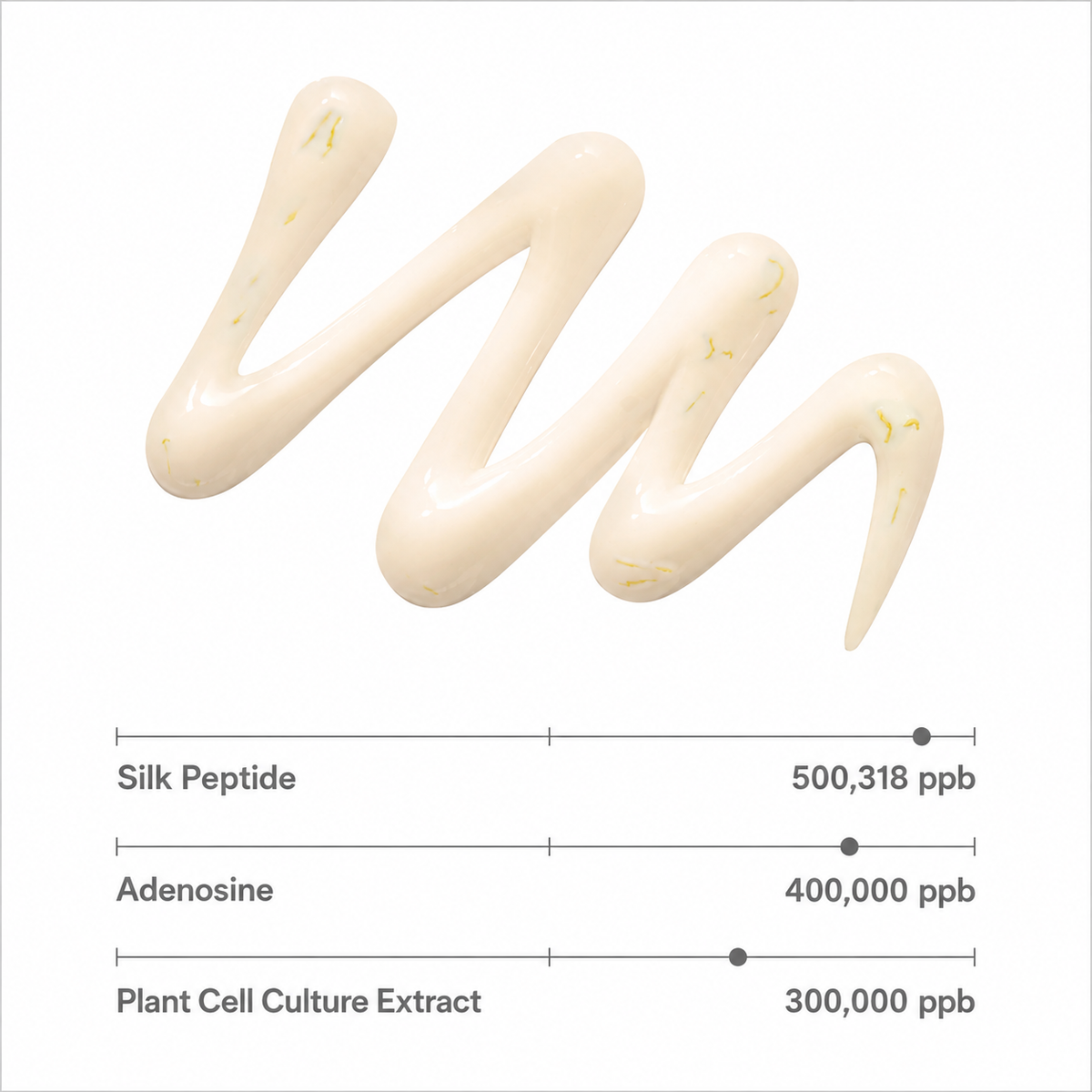
The working part:
30 ml / 1.01 fl. oz. · Full INCI list on the carton
Isn't retinol too strong for the eye area?
Strength isn't really the issue — buffering and frequency are. Retinol paired with ceramides and panthenol, used two or three nights a week to start, is manageable for most people. Build up rather than beginning nightly.
Can I use this if I'm new to retinol?
Yes, provided you go slowly. Some tightness or light flaking in the first fortnight is normal and settles. Persistent stinging or redness means drop back a night, not push through.
Can I use it with the Deep Collagen serum?
Yes — serum on the face first, then this along the orbital bone once it has absorbed. If your skin is new to retinol, alternate: serum every night, eye cream two or three nights a week.
How quickly will I see a difference?
Hydration and a less tired look come early. Crow's feet and firmness take six to twelve weeks, because retinol works on structure rather than surface. One tube is about three months, so a single tube is enough to judge it.
Does it help with dark circles?
Partly, and it depends on the cause. Shadowing from crepiness and lost firmness responds well. Circles from pigment or from the shape of your under-eye hollow are a different problem, and no cream fixes those.
Can I use it while pregnant?
No. Retinol isn't recommended during pregnancy or breastfeeding. Come back to it afterwards.
What if it's not for me?
Email us within 60 days and we'll refund it — you don't need to send the tube back.
Shipping:
Free US shipping on orders over $30. You'll get a tracking link by email as soon as it ships.
60-day guarantee:
If it isn't working for you, email us within 60 days and we'll refund it. Keep the tube.




The skin around my eyes feels so much softer and more hydrated. After a few weeks, the fine lines at the corners of my eyes look noticeably softer too.

Most eye creams feel too heavy on me, but this one absorbs beautifully. My under-eye area looks smoother and much less tired in the morning.

I bought this mainly for my crow's feet and I'm genuinely impressed. The skin around my eyes looks more cushioned and the little lines don't stand out as much.

My eye area used to look dry no matter what I applied. This keeps it comfortable and hydrated, and over time everything looks a little smoother and firmer.

I've been using it every evening and my under-eyes look fresher and more rested. I especially notice the difference when I put on concealer — it sits much more smoothly.

Such a lovely texture. It feels rich enough for mature skin without being greasy. My eye area looks smoother, softer and noticeably more refreshed.

Nothing beats retinol for wrinkles — it has more evidence behind it than anything else in skincare. The problem has always been the eye area, where the skin is a fraction of the thickness of the rest of your face. Most eye retinols end up flaking, stinging, or migrating into your eyes overnight, and people quit within a fortnight. This one is buffered with ceramides and panthenol so the barrier stays comfortable while the retinol works, and carried by silk peptides that help it absorb rather than sit. The texture is cushioned instead of runny, so it stays exactly where you tapped it.
Buffered with ceramides
Stays put, not in your eyes
Eyelid skin is around a tenth as thick as the skin on your cheek, with barely any oil glands to keep it supple — and it folds tens of thousands of times a day every time you blink. That combination is why lines appear there first, and why the eye area is the hardest place to use retinol, the one ingredient that reliably softens them. The formula is built around that tension: retinol to do the work, ceramides and panthenol to keep the barrier standing while it does.

Nothing else has retinol's track record on fine lines. But eyelid skin is a fraction of the thickness of the rest of your face, with almost no oil glands to cushion it — so the same ingredient that works beautifully on a cheek turns into flaking, stinging and red lids around the eyes. Most people give it a fortnight and quietly stop.
The alternative isn't much better. Gentle eye creams that promise firmness usually deliver hydration and a nice texture, so lines look softer for a couple of hours and unchanged by evening. And a runny formula migrates while you sleep, which is how you end up with stinging eyes at 3am.

This is retinol, and the eye area is the least forgiving place to use it. Two or three nights a week for the first fortnight, then build up as your skin adjusts. Going straight to nightly is the single most common reason people end up flaking and quitting.
Night use only. Not for use during pregnancy or breastfeeding.
That really is enough. More doesn't work faster on skin this thin — it just raises the odds of irritation and gives the product more reason to migrate overnight.
Use your ring finger — it presses more lightly than the others, which matters here. Tap along the bone that circles your eye socket and stop there. The product travels inward on its own while you sleep, so applying close to the lashes is how you wake up with stinging eyes.
Follow with your moisturizer. In the morning, sunscreen — retinol makes skin more sun-sensitive and the eye area burns easily.
Hydration and a less tired look come early. Crow's feet and firmness take considerably longer, because retinol works on the structure of the skin rather than its surface.
Some tightness or light flaking in the first fortnight is normal and settles. Persistent stinging or redness means drop back a night — not push through. One 30 ml tube is about three months of nightly use, so a single tube is enough to judge it properly.
Retinol works on the structure of the skin, so lines look softer week after week rather than for an hour.
Ceramides and panthenol keep the barrier comfortable — the part most eye retinols leave out.
Firmer lids and under-eyes, with less of the crepiness that reads as shadow and puffiness.
A cushioned texture that holds its place overnight instead of creeping toward your lash line.
If you've quit an eye retinol before
The one that flaked by day ten. The one that stung awake at 3am. The gentle one that hydrated beautifully and did nothing about the lines. Retinol is right for the eye area — it's the formula around it that decides whether you stay with it. Here's what we built instead.
| Glosche | Typical eye cream | |
|---|---|---|
| Retinol, not just hydration | ✓ | ✗ |
| Buffered with ceramides and panthenol | ✓ | ✗ |
| Silk peptides to carry it into thin skin | ✓ | ✗ |
| Cushioned texture that doesn't migrate | ✓ | ✗ |
| A build-up schedule, not just "apply nightly" | ✓ | ✗ |
| 30 ml — about three months of use | ✓ | ✗ |
| 60-day money-back guarantee | ✓ | ✗ |

No ten-step routine, no empty promises. A few layers before bed, and your skin does the rest while you sleep.
SHOP NOWFrequently asked questions
Strength isn't really the issue — buffering and frequency are. Retinol paired with ceramides and panthenol, used two or three nights a week to begin with, is manageable for most people. The mistake is starting nightly on skin that has never had retinol near it. Build up instead, and you get the results without the fortnight of flaking.
No. Retinol isn't recommended during pregnancy or breastfeeding, and that applies to eye products as much as anything else. Come back to it afterwards — it'll still be here.
Yes, provided you go slowly. Two or three nights a week for the first fortnight, then build up. Some tightness or light flaking early on is normal and settles as your skin adjusts. Persistent stinging or redness means drop back a night rather than pushing through — irritated skin isn't skin that's working harder.
Not if you apply it where you should. The texture is cushioned rather than runny, so it holds its place — but every eye product migrates inward a little while you sleep. That's why you tap along the orbital bone and stop there, instead of going right up to the lash line. Use a grain of rice for both eyes; more product is what makes it travel.
Hydration and a less tired look come early, often within the first fortnight. Crow's feet and firmness take six to twelve weeks, because retinol works on the structure of the skin rather than its surface. One 30 ml tube is about three months of nightly use, so a single tube is enough to judge it properly.
Partly, and it depends on the cause. Shadowing that comes from crepiness and lost firmness responds well — firmer skin catches less shadow. Circles caused by pigment, or by the shape of a hollow under your eye, are a different problem, and no cream fixes those. Worth knowing before you buy rather than after.
Yes — serum on the face first, then this along the orbital bone once the serum has absorbed. If your skin is new to retinol, alternate rather than stacking: serum every night, eye cream two or three nights a week until you know how your skin takes it.
Email us within 60 days and we'll refund it. You don't need to send the tube back, and it doesn't matter how much you've used — sixty days is deliberately long enough to actually judge a retinol rather than just try it.